
Great prices on self-drive holidays to Ireland. Ferry crossing or accommodation only.
 Dublin
has transformed itself in recent years into a vibrant, cosmopolitan city and is
now one of the most visited capitals in Europe.
Dublin
has transformed itself in recent years into a vibrant, cosmopolitan city and is
now one of the most visited capitals in Europe.
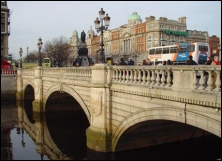
The city is divided by the River Liffey. South of the Liffey is the main shopping
area around Grafton Street, Trinity College, St Stephens Green and the Temple Bar
district. To the north of the river are O'Connell Street and Henry Street, the
other major shopping streets. Ha'penny Bridge and the main thoroughfare of O'Connell
Bridge cross the Liffey and are landmarks and attractions in their own right.
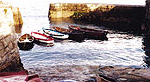
Around Dublin are many seaside suburbs which curve around Dublin Bay. Most resorts
along the bay can be reached by DART from the centre of Dublin, and there are many
popular walks along the coastline.
To the south, Dun Laoghaire (pronounced Dun Leary), is a busy harbour and resort,
also home to the National Maritime Museum. 1km south (about half an hour's walk
along the coast) is Sandycove with a pretty beach and the Martello tower which houses
the James Joyce Museum (it is also the setting for the opening of his novel Ulysses).
Still further south is Dalkley, where many castle remains can be found.
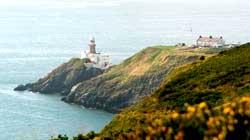
To the north of Dublin are Howth, Malahide, whose castle is open to visitors, and
to the far north (30km from Dublin), the quiet resort of Skerries. Howth is a pretty
harbour town set on a peninsular offering superb views of Dublin Bay, with a variety
of pubs, bars and restaurants.
The massive St James's Gate Brewery is found to the west of central Dublin
and is a key part of Dublin's heritage and identity. The only part of the brewery
open to visitors is the Guinness Storehouse which opened in 2000. There is an impressive
exhibition, but the highlight of the visit is the opportunity to taste Dublin's
finest pint of Guinness in the Gravity Bar at the top of the building with panoramic
views of Dublin.
 Drive-Alive on Facebook
© Copyright 1999-2024 Drive-Alive Holidays Ltd - All rights reserved.