
Northern Italy is a country of scenic contrasts, rich in history. From the mighty Alps and Dolomite mountains, cut deeply by great rivers and glorious lakes, the land falls away to the vast plain of the River Po and its tributaries, which flow into the Adriatic close to Venice, truly one of the wonders of the world. In the west the Italian Riviera is a coastline of beaches and high mountains extending almost to the sea. Everywhere are ancient towns and cities, testament to some of western civilisation's greatest achievements, while the modern industrial and commercial cities of Milan and Turin ensure Italy's place in the modern world.
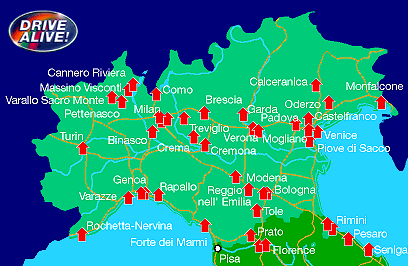
Map of Northern Italy
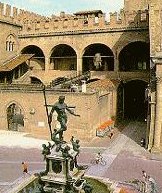
Bologna, a busy and bustling city, has one of Europe's oldest universities,
and is a fascinating place to stroll around, with its many medieval towers, arcaded
streets, historic churches, palaces, galleries and museums. Bologna also enjoys
an enviable situation on the southern edge of the central plain, close to the foothills
of the Appenines, which offer many possibilities for walks and drives among
beautiful mountain scenery. The seaside resorts of the Adriatic coast are just 80
kms distant, as is the beautiful town of Ravenna with its wonderful mosaics.
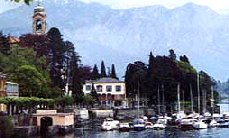
Cannobio is just one of the delightful resort towns around the shores of
Lake Maggiore, one of the lovely Italian lakes. Close to Maggiore is the
smaller and peaceful Lake Orta, The other great lakes are genteel Como,
playground of the Milanese, and Garda, much loved by the Germans and excellent
for windsurfing. All the lakes are set spectacularly between steep and rocky mountains
which gradually open out towards the south. Along their banks are established resorts
like Como, Cernobbio, Riva and Bellagio, offering an enticing
mixture of palm-fringed promenades and majestic villas along with facilities for
all the latest in watersports and leisure activities.
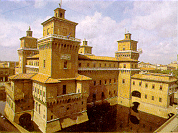
Ferrara with its spectacular moated castle, is just one of countless Italian
cities on the northern plain which deserve a lengthy visit to do them justice. Amongst
many, visit the famous university town of Padova with a wealth of ancient
buildings; there's Cremona of Stradivarius fame; Mantova has its palaces
and historic centre. While you're here, take some time to drive around the flat
countryside close to the famous cheese-making town of Gorgonzola, where time
seems to have stood still and huge ancient farmsteads still act as a focal point
for the villages around.
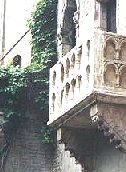
Verona is forever associated with the story of Romeo and Juliet, and Juliet's
house, with its famous balcony, is a much visited attraction. The other great draw
is the almost perfectly preserved Roman amphitheatre, where open-air performances
of the great Italian operas take place throughout the summer. Take a cushion - stone
seats are hard! Verona is a great base for visiting the other cities of northern
Italy, and is just an hour's drive from lovely Lake Garda and the Alpine foothills.
North of the city are countless acres of vineyards producing millions of litres
of some of Italy's most famous wines, among them Valpolicella, Soave
and Bardolino.
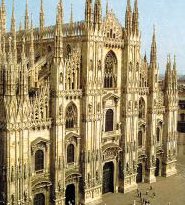
Milan is a powerhouse of industry and commerce and, together with Turin,
is home to some of Europe's most successful companies such as Fiat and Olivetti.
Both cities are sophisticated centres of culture, the opera house of La Scala in
Milan being famous world-wide, almost as much for the enthusiasm of its audience
as for its wonderful performances. Turin and Milan vie for supremacy as the fashion
capital of Europe, and both cities offer wonderful shopping; Milan in its great
arcades and Turin along the imposing Via Roma, and the adjoining arcades. Turin
probably offers the best in food and wine, while Milan's Cathedral, or Duomo,
is among the finest anywhere. There's plenty for connoisseurs of art and history,
and all this combined with a lively nightlife, makes a stay in either of these cities
a thoroughly rewarding experience.
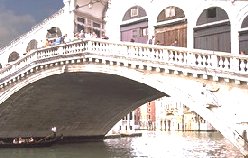
Venice is unlike anywhere else in the world. Set in the lagoon, it is completely
dominated by water. Leave your car at the end of the causeway. There are no roads,
so movement around the city is by motorised water-buses, or, if you're feeling
romantic, by gondola. All goods are moved by boat, and all this water-borne activity
gives a feeling of being in a city on another planet. As you walk through the narrow
streets, wonderful sights are around every corner; palaces at the end of dead-end
alleys, small squares with superb medieval churches, canals with their arched bridges;
and suddenly and unexpectedly you emerge from some small passage into the brilliant
sunlit space of St Mark's Square. Several days are needed to do justice to this
amazing city, and try to avoid the mid-summer holiday peak when it can be uncomfortably
crowded.
 Drive-Alive on Facebook
© Copyright 1999-2024 Drive-Alive Holidays Ltd - All rights reserved.